
Event Technologie in 2026: The Ultimate Guide to Hybrid and Digital Success

Updated: Mar 20
Discover how the latest event technologie trends, from AI-powered translations to interactive livestreaming, can transform your corporate congresses into global experiences.
What is Event Technologie in 2026? Defining the New Standard
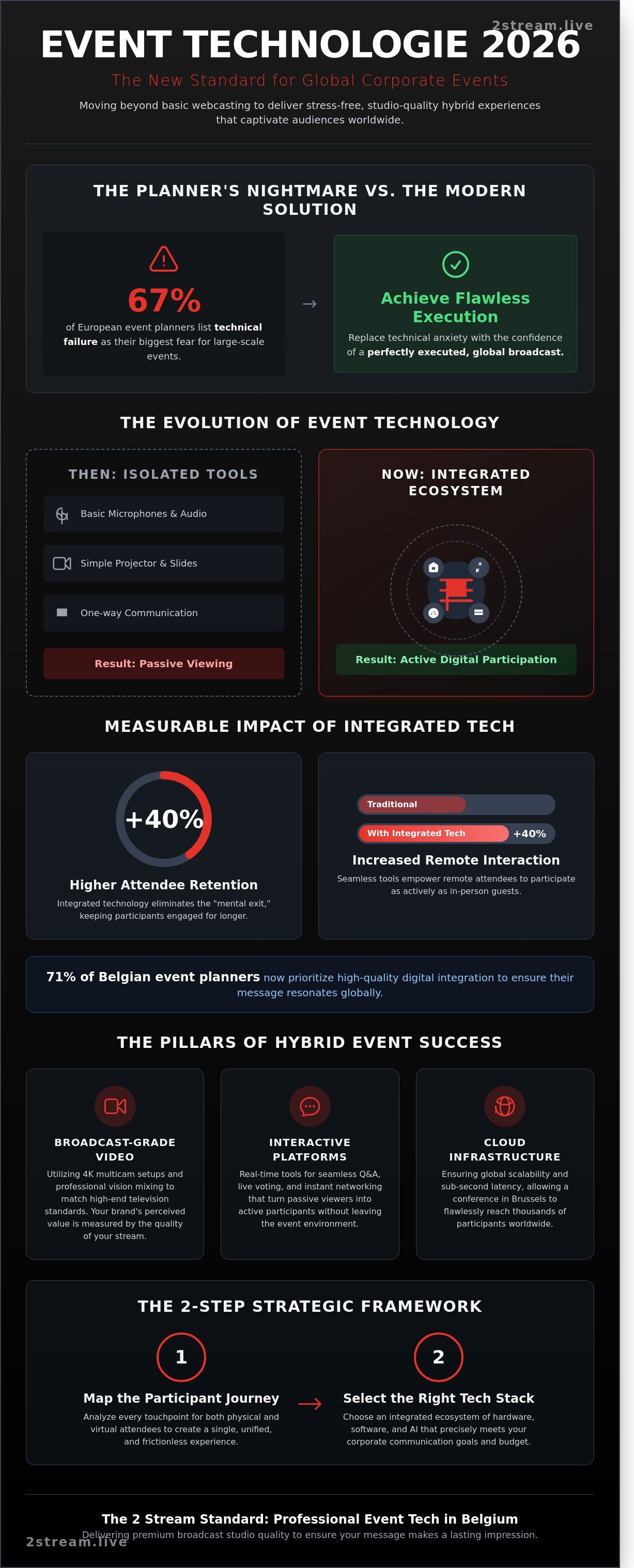
In 2026, event technologie is no longer a support function; it is the core infrastructure that defines the participant experience. The era of simple AV setups—a projector and a microphone—has been replaced by integrated digital ecosystems. This evolution redefines "event technologie" to encompass a strategic blend of broadcast-grade hardware, interactive software, and intelligent AI. The focus has shifted decisively from passive viewing to active, meaningful digital participation.
The Core Components of Modern Event Tech
A professional event today is built on three technological pillars:
Broadcast-Grade Video Production: High-definition, multi-camera setups are the minimum standard, creating a dynamic and visually engaging experience far superior to a single webcam feed.
Interactive Platforms: These are the digital venues where audiences engage. They facilitate real-time Q&A, polling, networking, and feedback, making remote participants feel present and valued.
Cloud-Based Infrastructure: For global reach, a robust cloud backbone is essential. It ensures stable, low-latency streaming to thousands of attendees, a principle that powers everything from major corporate congresses to consumer platforms like Good IPTV Services.
Why Traditional AV is No Longer Enough
The "Zoom-style" corporate meeting, while functional for internal calls, fails to meet the professional standards required for a high-stakes congress. B2B audiences now expect TV-quality production values. The primary challenge—and opportunity—for event planners is to bridge the gap between the physical and virtual venues, creating a single, cohesive experience for all. This requires a deep understanding of professional event broadcasting and the technology that powers it.
The Pillars of Hybrid Event Success: Beyond the Screen
A successful hybrid event feels like a single, unified gathering, not two separate ones. This seamless integration is achieved through a mastery of specific event technologie pillars that focus on bringing the world to your stage and your stage to the world.
Remote Speaker Integration: Flawlessly incorporate global experts into your local event, making their presence feel as impactful as if they were in the room.
Dynamic Multicam Direction: A skilled technical director uses multiple camera angles to maintain viewer attention, highlight key moments, and create a polished, professional broadcast.
Low-Latency Streaming: For genuine global conversation, real-time interaction is non-negotiable. Low-latency technology eliminates awkward delays in Q&A sessions.
Dedicated Broadcast Studio: A controlled studio environment eliminates variables like poor lighting, bad acoustics, and unstable internet, guaranteeing a flawless production.
Remote Speaker Integration Done Right
Bringing in a remote speaker involves more than just a video call. It requires a technical pre-check to ensure high-fidelity audio and video, coaching the speaker on engagement techniques for a hybrid audience, and a platform that can seamlessly manage questions from both on-site and remote guests.
The Power of Multicam Production
For long-form events like congresses, a single, static camera is a recipe for digital fatigue. Dynamic switching between a wide shot, a speaker close-up, and slides keeps the content fresh and engaging. The technical director is the artist who orchestrates these feeds, integrating graphics and pre-recorded videos to create a broadcast that informs and captivates.
AI and Interactivity: Maximizing Engagement and Reach
Technology's greatest promise is its ability to break down barriers and foster connection. In 2026, AI and interactive tools are the keys to unlocking unprecedented levels of audience engagement and expanding your event's global footprint.
Live AI Translation: Instantly break the language barrier for international congresses, making your content accessible to a truly global audience.
Real-Time Polling & Gamification: Keep your audience active and involved. Use polls to gauge opinion, steer conversations, and gather valuable data.
Data Analytics: Move beyond simple attendance numbers. Modern platforms measure exactly how, when, and where your audience engages, providing clear data to prove event ROI.
Custom Tools like CenterStage: Generic meeting software often falls short. Custom-built platforms offer superior branding, security, and features tailored to professional B2B communication.
The Revolution of Live AI Translation
AI-driven subtitles and voiceovers can now be generated in real-time with remarkable accuracy. This technology is significantly more cost-effective than traditional human translation booths, allowing you to welcome non-native speakers from around the world without a prohibitive budget increase.
Interactive Tools for Audience Participation
The psychology of digital engagement hinges on making the audience feel heard. A well-designed Q&A flow that gives equal weight to in-person and remote questions is crucial. Live polls can be used not just as an add-on, but as a tool to drive the event's narrative, allowing the audience to influence the direction of the conversation.
Strategic Planning: Your 5-Step Guide to Choosing an Event Technologie Stack
Selecting the right technology can feel overwhelming. This strategic guide breaks the process down into manageable steps, shifting the focus from simply renting gear to building a coherent communication strategy.
Step 1: Define Your Primary Communication Goals: What is the key message you want your audience to take away? Is the goal to educate, to network, or to launch a product? Your goals will dictate the technology you need.
Step 2: Map the Participant Journey: Consider the experience from the perspective of both a live and a remote attendee. How will they register, watch, interact, and network? Ensure the journey is seamless for both.
Step 3: Audit Your Venue’s Technical Capabilities: Does the venue have sufficient, redundant internet bandwidth for 4K streaming? Are the acoustics suitable for broadcast-quality audio? A thorough audit prevents day-of disasters. The principles of a technical audit are crucial, even when considering live events beyond the studio.
Step 4: Select a Production Partner, Not an Equipment Vendor: The most common point of failure is "dry hiring" equipment without the expertise to run it. A production partner provides the strategy, the technology, and the technical crew to ensure success.
Step 5: Conduct a Full Technical Dress Rehearsal: A complete run-through with all speakers (both remote and on-site), cameras, and interactive elements is the only way to guarantee a smooth, stress-free event.
Production Partner vs. Rental Company
A rental company gives you tools. A production partner delivers an outcome. The value of a true partner lies in technical "ontzorging"—a Dutch term meaning complete technical peace of mind. They handle the complexity, manage the risks, and add strategic value by advising on how to best present your content for a hybrid audience.
The 2stream Standard: Professional Event Tech in Belgium
Navigating the complexities of modern event technologie requires more than just equipment; it demands a partner who combines strategic insight with technical excellence. This is the core of the 2stream philosophy. We address the primary pains of event organizers—fear of technical failure, low remote engagement, and vendor complexity—by providing an integrated, stress-free solution.
The Zaventem Studio Advantage
Our state-of-the-art broadcast studio in Zaventem is the heart of our operations. Its strategic location near Brussels Airport makes it a convenient hub for your international speakers and clients. More importantly, it is a controlled environment engineered for perfection, with multicam setups, green screen capabilities, and a dedicated technical team. This eliminates the risks and variables of on-site production, guaranteeing a flawless broadcast that reflects the professionalism of your brand.
Custom Solutions with CenterStage
We saw the limitations of generic webinar tools, so we built our own. CenterStage is our proprietary platform designed specifically for high-stakes B2B events. It offers deep branding and customization to align with your corporate identity, secure hosting for sensitive business data, and a suite of interactive tools proven to increase audience participation. By using a tool built for professional communication, you avoid the "impersonal" feel of standard meeting software and create a premium digital experience. With 2stream, you get a single, expert partner who manages the entire technical ecosystem, providing the complete "ontzorging" you need to focus on what truly matters: your message.
Frequently Asked Questions (FAQs)
What is the most important piece of event technologie for a hybrid congress? The most critical element is the integrated platform that bridges the physical and virtual audiences. It should combine a high-quality livestream with seamless interactive features like Q&A, polling, and networking to create a single, unified experience for everyone.
How much does it cost to implement professional livestreaming for an event? Costs vary widely based on goals, duration, and complexity (e.g., number of remote speakers, multicam setup). A better approach is to define your communication objectives first. A professional partner can then design a technology stack that delivers the best ROI for your specific goals, from a single-session webinar to a multi-day international congress.
Can I integrate remote speakers into a live event without lag? Yes. With professional-grade streaming protocols and a dedicated technical partner managing the connection, you can achieve near-real-time interaction. The key is a pre-event technical check with the speaker and the use of low-latency streaming infrastructure.
Is AI translation accurate enough for professional business events? Modern AI translation has become remarkably accurate for many languages, especially for providing live subtitles. While it may not be perfect for highly nuanced or legal-heavy content, it is an excellent and cost-effective tool for making your event accessible to a much wider international audience.
What is the difference between a webinar tool and a livestreaming service? A basic livestreaming service (like YouTube Live) primarily broadcasts video one-way. A professional webinar tool (like 2stream's CenterStage) is an integrated environment built for two-way communication, featuring audience interaction tools, registration, data analytics, and enhanced security, all within a customizable, branded interface.
Why should I choose a studio in Zaventem for my virtual event? A dedicated studio guarantees a controlled environment free from technical variables like poor lighting, background noise, or unstable internet. Our Zaventem studio's proximity to Brussels Airport makes it an ideal, easily accessible hub for bringing in key speakers for a professional, high-impact broadcast.
How can I measure the engagement of my digital audience? Modern event platforms go far beyond view counts. You can measure engagement through metrics like the number of questions asked, poll participation rates, chat message volume, resources downloaded, and audience retention (how long they stay tuned in). This data provides concrete evidence of your event's impact and ROI.


Comments