
Turn event livestreams into on-demand video platforms

A livestream doesn't have to end when the event does. With the right platform, it becomes a searchable, branded video library that keeps working for months.
Most organisations still treat their livestream as a one-off broadcast. The event ends, the recording gets dumped on YouTube or buried in a shared drive, and within a week nobody outside the events team can find the keynote they need. That's not a technology problem. It's a strategy gap, and it's one we run into constantly.
We see this constantly in our work with communications and event teams at associations, corporations and international organisations: they invest heavily in production quality for the live moment, then let the resulting video assets quietly disappear. A three-day conference with twenty sessions, a dozen speaker interviews and a closing panel often ends up as a handful of unstructured files, if it's archived at all. The content still has value, it's just inaccessible.
This is the exact gap CenterStage, developed and operated by 2 Stream in Belgium, was built to close. Instead of asking "where do we post the recording," the better question is "how do we turn this event into a content platform our organisation keeps using." That's a different design problem, and it's the one this article addresses.
Why does event video lose value after the livestream ends?
Event video loses value after the livestream because it stops being organised, findable or branded, not because the content itself becomes less relevant. A keynote on regulatory policy or a panel on industry strategy is often just as useful three months later, but only if someone can actually locate it.
The typical failure pattern looks like this:
The recording is one long file. A three-hour livestream gets archived as a single video, so nobody wants to scrub through it to find the ten-minute segment they actually need.
It lives outside brand control. Uploading to a generic video host means losing registration data, viewer analytics and any consistent visual identity.
There's no structure. Without sessions, chapters or speaker tagging, a video archive is really just a folder, and folders don't get revisited.
Access isn't managed. Public platforms don't distinguish between members, staff, press and the general public, which matters a great deal for associations and institutional events.
None of these are technology limitations. They're the direct result of treating the livestream as the finish line instead of the starting point for a longer content lifecycle. Organisations that work with us on hybrid event production for international organizations increasingly ask about this second-life question before the event even happens, which is the right moment to plan for it.
How do you turn an event recording into a structured content platform?
You turn an event recording into a content platform by breaking it into sessions and chapters, tagging it with speaker and topic metadata, and publishing it inside a branded, access-controlled environment rather than as a single raw file. This is a production and information-architecture task, not just a hosting decision.
CenterStage approaches this by organising content into events, sessions and chapters, with speaker information attached to each piece. A three-day summit becomes a navigable library: attendees can jump straight to the panel they missed, a communications team can pull a single keynote for internal distribution, and a press contact can be sent a direct link to one interview instead of a three-hour recording.
Depending on setup, the platform also supports registration, moderated Q&A, polling and analytics, so the interactive layer that made the live event engaging doesn't disappear once the broadcast ends. Viewer data carries forward too, giving event and communications teams a picture of what content actually gets watched after the fact, not just who registered for the live session.
This is also where production quality compounds. A well-shot, well-edited recording is worth republishing; a poorly captured one isn't. That's why the workflow matters as much as the platform: capturing usable, well-labelled footage during the event is what makes the on-demand layer worth building at all. Our hybrid event production service is built around exactly that handoff, from live direction and interactive features during the event through to post-event structuring for later use.
What role does CenterStage play in live, on-demand and branded distribution?
CenterStage combines live streaming and on-demand video in one branded environment, so an organisation isn't switching tools between the live broadcast and the archive that follows it. It's built specifically for conferences, associations, companies and institutional events rather than as a general-purpose video host.
A few things define how it fits into that workflow:
One branded destination. Custom branding and client domains mean the platform looks like it belongs to your organisation, not to a third-party video service.
European hosting. CenterStage is developed in Belgium, hosted in Europe, and designed with GDPR and European organisations in mind, which matters directly for EU institutions, government bodies and NGOs handling attendee and stakeholder data.
Streaming flexibility. 2 Stream can provide the streaming and CDN layer, but the platform isn't locked to a single streaming provider, so existing infrastructure or vendor relationships don't need to be discarded.
Full production pipeline. 2 Stream can handle the complete chain: event video production, livestreaming, recording, post-production and publication through CenterStage, meaning the same partner responsible for capturing your keynote is also responsible for making sure it's still watchable and findable in six months.
For organisations already using webinar and hybrid event formats for recurring programming, this matters even more. A monthly webinar series or a recurring stakeholder briefing generates a growing library over time, and that library is only an asset if it's structured consistently from the first session onward.
What does a CenterStage environment look like in practice?
Nyxen's CenterStage environment is a practical example of a dedicated, branded video destination running on the platform, showing what an organisation's own content hub can look like once event video is structured properly. Rather than a single event archive, it functions as a standing destination that can hold multiple events, sessions and speaker content over time.
That's the shift we'd point to for any event or communications manager evaluating this: the value isn't in having a video page, it's in having a destination your audience learns to return to. Once a stakeholder group, member base or internal audience knows there's one place where conference content consistently lands, they stop asking the events team to re-send recordings and start checking the platform directly.
Why does this matter for defence, government and international organisation events?
It matters because these sectors deal with stakeholder groups that can't always attend live, security and access requirements that generic video hosts don't accommodate, and reputational stakes that make brand consistency non-negotiable. A NATO-adjacent conference, an EU institutional event or a multinational's annual stakeholder briefing all generate content that different audiences need to access under different conditions.
In our engagements across defence, government and corporate sectors, the recurring pattern is the same: high production investment in the live moment, followed by little to no plan for what happens to that footage afterward. A platform with European hosting and GDPR-aligned design, combined with registration and access control, addresses a real constraint for these organisations rather than a nice-to-have. It's also why we treat the production and the platform as one continuous service rather than two separate vendors handing off a file. Our work on event technology decisions for agencies managing complex, multi-stakeholder events reflects the same principle: choose the workflow that survives contact with real logistics, not the one that looks best in a demo.
What should event and communications managers do before their next event?
Plan the on-demand structure before the event, not after. Decide which sessions will be chaptered, which speakers need individual pages, who gets access to what, and where the content will live permanently, all before the cameras roll. Retrofitting structure onto a pile of raw recordings afterward is slower and produces a weaker result than building it in from the start.
If your organisation runs recurring conferences, member events or stakeholder briefings, the return on this planning compounds every time you run another event into the same platform. The library gets more valuable, not just bigger.
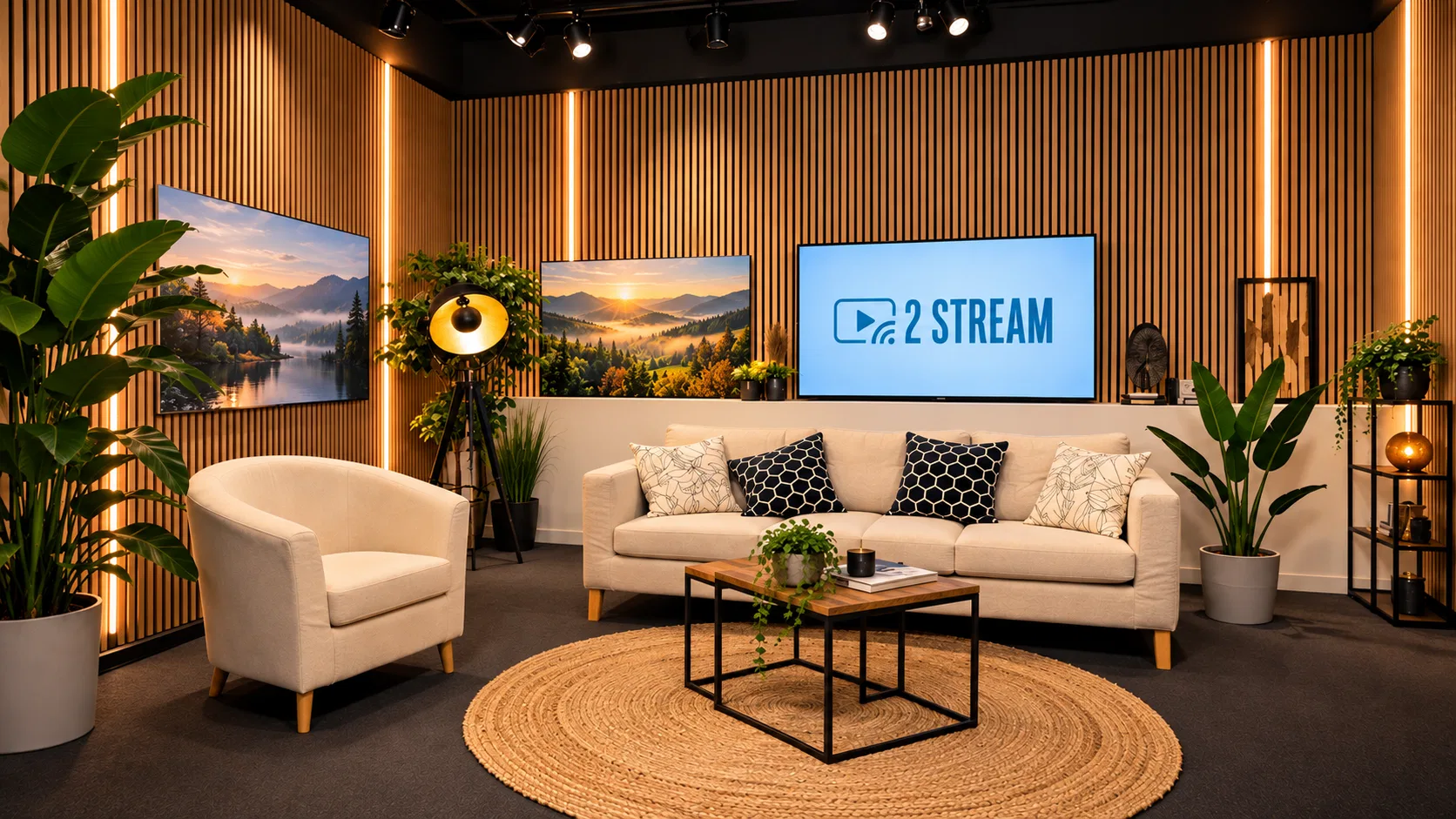
The core shift is simple: a livestream is not the end of your event content's life, it's the raw material for a video platform that keeps delivering value long after the broadcast ends. Talk to 2 Stream about turning your next event's footage into a dedicated CenterStage environment, book a studio tour and conversation to see how the production and platform work together.
Frequently asked questions
What is the best platform for turning live events into on-demand video?
The best platform combines live streaming and on-demand playback in one branded, structured environment rather than requiring a separate archive tool. CenterStage does this by organising content into events, sessions and chapters with speaker information, registration and analytics, so the same platform handles the broadcast and its permanent afterlife.
Can I use CenterStage without 2 Stream handling the streaming?
Yes. CenterStage is not locked to a single streaming provider. 2 Stream can supply the streaming and CDN layer as part of a full production workflow, but organisations with existing streaming setups can bring that infrastructure into the platform instead.
Is CenterStage suitable for GDPR-sensitive organisations?
Yes. CenterStage is developed in Belgium with European hosting and is designed with GDPR and European organisations in mind, which matters for EU institutions, government bodies, NGOs and any organisation handling registration or attendee data under EU rules.
How is CenterStage different from posting event videos on YouTube?
CenterStage keeps content inside a fully branded environment with custom domains, structured sessions and chapters, registration, moderated Q&A and viewer analytics, whereas YouTube offers none of that brand control or structured access management. It's built specifically for conferences, associations and institutional events rather than general public video sharing.
Does 2 Stream only provide the platform, or also the production?
2 Stream provides the complete workflow: event video production, livestreaming, recording, post-production and publication through CenterStage. That means the same partner captures the event and structures the resulting content for long-term on-demand use.


Comments